

The Federal Character principle is primarily enshrined in Section 14(3) of the 1999 Constitution of the Federal Republic of Nigeria (as amended).The section mandates that the composition of the Government of the Federation, or any of its agencies, and the conduct of its affairs shall be carried out in a manner that reflects the federal character of Nigeria and promotes national unity. It is specifically designed to command national loyalty and ensure there is no predominance of persons from a few states, religious, ethnic, or sectional groups in government.
To ensure the enforcement of the provision and engender national cohesion, the Federal Character Commission (FCC) was established as a constitutional body to ensure fair and equitable distribution of public posts and socio-economic infrastructure across the federation. It was given the sole responsibility of ensuring that all Ministries, Departments and Agencies (MDAs) respect the constitutional requirement. Unfortunately, the agency has been in the news for the wrong reasons. It has become notorious for blatantly contravening the policies it was set up to enforce.
All over the world, the failure or success of society is defined by the quality of character of its leaders. The word character has multiple meanings, dependent on the context it is used. Perhaps the most acceptable or commonly used definition ralates to a person’s moral nature. For example, a good moral character refers to a consistent behavioural pattern which aligns with best ethical standards of society. This demonstrates the individual’s integrity through honesty, respect for others and adherence to due process. But most importantly, the hallmark of one’s integrity should be founded on consistently telling the truth, respect and empathy for others and doing what is just. It is, therefore, imperative that the soul of any decent society without exception must and should be hinged on these fundamental signposts.
When President Bola Ahmed Tinubu started shopping for a new helmsman for the Federal Character Commission in 2025, his mind was focused on a personality who had these outstanding qualities. Beyond that, Mr President was also determined to purge the Commission of its notoriety of the toga of corruption-ridden institution.
Recall that in 2023, the FCC had been dogged with an unprecedented scandal which rocked the establishment.
It faced major scandals in recent years, primarily revolving around massive job racketeering, nepotism, and certificate forgery. These scandals reached an unprecedented scale under the former leadership of Dr. Muheeba Farida Dankaka.
In a job racketeering saga that unravelled in 2023, several commissioners and former staff accused Dr. Dankaka of allegedly running an illicit syndicate that sold employment slots to the highest bidders.
The allegation elicited the intervention of the House of Representatives which set up an ad-hoc committee to investigate the saga. An aide to the FCC chairperson, Haruna Kolo, confessed to the ad-hoc committee that he acted as a middleman for the chairman. He admitted to collecting over N75 million on her behalf from job seekers, with payments made into personal bank accounts.
According to him, job slots were reportedly sold for sums ranging from N1 million to N3 million per position. In an open rebuke, about 30 out of the 37 commissioners—dubbed the “Integrity Group”—publicly accused Dr. Dankaka of monopolizing employment slots, shutting them out of recruitment processes, and running a one-man show.
The aggrieved commissioners and labour unions repeatedly petitioned the Presidency and the National Assembly, accusing the chairman of nepotism, secret recruitments and favouritism in job slots. They alleged that the commission’s leadership routinely allocated the majority of available job slots to their own regions and senatorial districts.
In 2025, staff members protested and filed court cases alleging that the former chairperson replaced 13 existing commission staff members with individuals exclusively from her hometown, Offa in Kwara State. Another dimension was added to the saga with the allegation of certificate and identity forgery, credential falsification as well as discrepancies in credentials, all revolving around Dr. Dankaka.
Civil society groups and labour representatives alleged that she forged her academic documents, including her Masters in Business Administration (MBA) certificate. The police and the Economic and Financial Crimes Commission (EFCC) questioned her in 2024 after Ahmadu Bello University (ABU) reportedly denied issuing her the certificates she claimed to have obtained from to he premier tertiary institution.
A controversial twist was added to the checkered tenure of the chairman in August 2025 when she sought an extension of her tenure. The Presidency caused a stir by confirming a second five-year term for Dr. Dankaka, only to reverse the decision on the very same night of the announcement and appoint Hon. Hulayat Motunrayo Omidiran in a “superseding” statement.
Labor unions, including the Nigeria Civil Service Union (NCSU), the Association of Senior Civil Servants of Nigeria (ASCSN), and Nigeria Union of Public Service Reportorial, Secretarial, Data Processors and Allied Workers (NUPSRAW) alleged that the former chairperson made desperate attempts to secure reappointment by offering a N500 million bribe. This led to violent altercations and protests in and around the commission’s Abuja headquarters
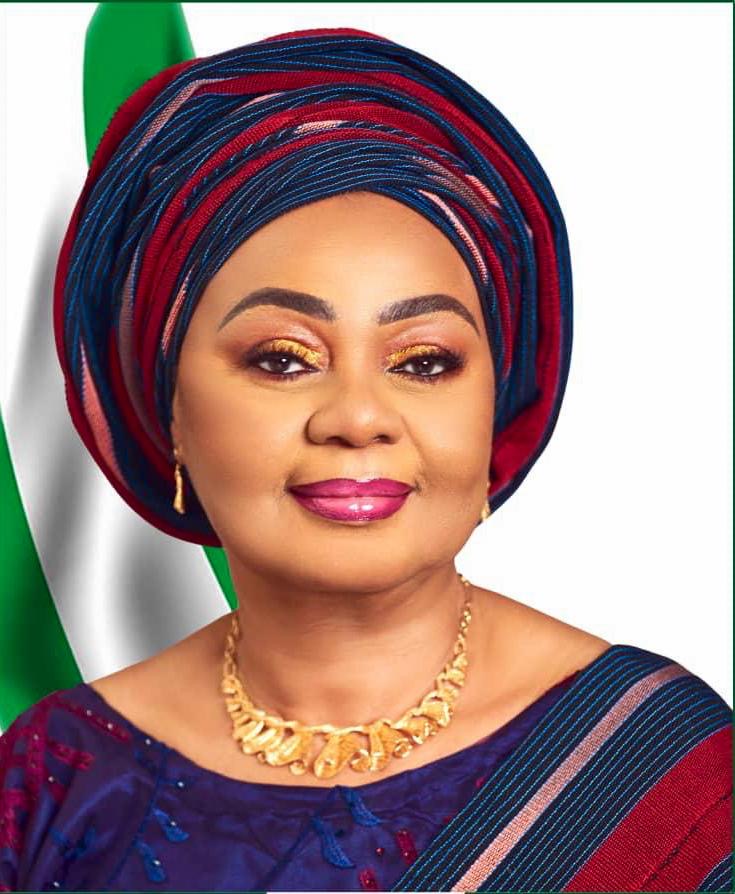
In appointing Hon. Hulayat Motunrayo Omidiran, President Tinubu is looking to reset the agency, rescue it from the series of scandals that have bedeviled it and distracted it from carrying out it’s core functions and return it to the path of sanity and probity. And she has since hit the ground running and exploring measures to strengthen it in the enforcement of the principle of fairness representation in MDAs. In an interactive session between the Senate Committee on Federal Character and Intergovernmental Affairs, chaired by Ede Dafinone, and the management of the Commission at the National Assembly, Omidiran called for the establishment of a tribunal and stronger legislative backing to enhance enforcement of the Federal Character Principle and address persistent violations by Ministries, Departments and Agencies.
She identified inadequate funding and weak enforcement powers as major obstacles hindering the Commission from effectively carrying out its constitutional mandate.
According to her, empowering the Commission with prosecutorial authority and creating a dedicated tribunal would strengthen compliance and improve accountability across public institutions.
“The Commission requires stronger legislative backing to effectively discharge its constitutional responsibilities. Addressing persistent funding gaps and empowering the FCC with prosecutorial authority will significantly improve compliance and accountability across Ministries, Departments and Agencies,” she declared at the parley with federal lawmakers.
Omidiran said the proposed FCC tribunal would provide a specialised platform for handling cases involving violations of the Federal Character Principle.
“We are advocating for the establishment of a Federal Character Commission Tribunal to fast-track prosecutions of violations of the Federal Character Principle. Such a tribunal will provide a dedicated platform for enforcement, expedite the prosecution of offenders and serve as a deterrent against breaches of the law,” she added.
Senator Ede Dafinone, chairman of the Senate Committee on Federal Character, was impressed with Omidiran’s submission and reaffirmed the committee’s commitment to strengthening the legal and institutional framework required for effective implementation of the Federal Character Principle, which he described as critical to national unity, integration and equal opportunity.
Dafinone noted that despite the Commission’s constitutional mandate, compliance by some MDAs remains weak due to administrative, financial and political challenges.
He said “The Committee has observed that many Ministries, Departments and Agencies do not consistently cooperate with the Commission. In several instances, requests for information are ignored, records are inadequately maintained and compliance mechanisms remain weak, undermining the integrity of the Federal Character framework,”
The senator added that the committee would work with relevant stakeholders to address funding constraints, strengthen enforcement mechanisms and close existing loopholes in the implementation of the Federal Character Principle.
“The issues highlighted by the Commission, particularly funding constraints, weak compliance mechanisms and enforcement limitations, deserve urgent attention. The Committee will work closely with the FCC to strengthen the framework necessary for effective implementation of its constitutional mandate,” Dafinone stated.
The Delta Central senator stressed that the committee’s goal extends beyond ensuring compliance, saying efforts are focused on building a system that promotes fairness, merit and equal opportunities for all Nigerians.
The meeting ended with both the Senate Committee and the FCC pledging deeper collaboration to strengthen enforcement, improve compliance and enhance the implementation of the Federal Character Principle across the public sector.
The verve and diligence now taking root in the FCC is in line the antecedents of Hon. Ayo Hulayat Omidiran who comes with a distinguished pedigree and record in public service and management. She was a two-term member of the House of Representatives, pioneering FIFA Committee member, and champion of equity, women’s development, and grassroots empowerment across Nigeria.
Hon. Omidiran is a household name football administration, promotion of female football and owned and solely funded a football team, Omidiran Babes that for many years was one of the dominant teams in the top tier of female football league.
Over her decades-long career, she has transitioned seamlessly from pioneering female football proprietorship to holding vital legislative seats in the National Assembly. In January 2026, she was sworn in by President Bola Ahmed Tinubu as the Executive Chairperson of the Federal Character Commission (FCC).
Hon. Ayo Omidiran obtained a Bachelor of Science (B.Sc) degree in Biochemistry in 1985 from Ahmadu Bello University, Zaria. While at ABU, she served as the Secretary of Queen Amina Hall between 1983 and 1985. She completed her National Youth Service Corps (NYSC) programme from 1985 to 1986.
During her tenure in the House, she was actively involved in lawmaking and oversight functions, serving across numerous high-profile committees, including the House Committee on Sports where she was Deputy Chairman / Vice-Chairman. She also served in the committees on Judiciary, Communications, Interior, Solid Minerals, Diaspora Matters, Banking and Currency, Women Affairs and Social Development as well as Women in Parliament. During her legislative tenure, Hon. Omidiran initiated several socioeconomic interventions within her constituency, including healthcare and infrastructure during which she built a primary healthcare center and established middle schools in Ayedaade and Irewole, alongside renovating primary classrooms in Isokan. She also provided interest-free loans to over 1,000 rural women and financial grants to youths with viable while conducting technical skills training for 40 youths and distributing safety helmets to local motorcyclists.
In January 2026, President Bola Ahmed Tinubu appointed and swore in Hon. Omidiran as the substantive Executive Chairperson of the Federal Character Commission (FCC). Taking over from the acting chairman, Kayode Oladele, at the Abuja headquarters, she immediately began reforming the agency’s internal frameworks by constituting statutory and ad hoc committees to enhance institutional balance and effectiveness.
An avid football enthusiast from her youth, Hon. Omidiran, apart from establishing Omidiran Babes Female Football Club in 1997 has been a foundational pillar in the development of women’s football in Nigeria and globally.
She was appointed to the board of the Nigerian Football Association (now NFF) serving from 2002 to 2005; presently serves in FIFA’s Women Committee since 2006 and achieved global recognition as the first woman appointed to the Organizing Committee for the FIFA U-17 and U-20 Women’s World Cups.
She has received numerous awards, including the 2005 Excellent Media Southwest Woman of the Year and the
2012 National Assembly Media Most Outstanding Representative Award For the South-West.